
From Campaigns to Journeys: How Smarter Direct Mail Drives Better Results in 2026 📲
Direct mail has always been a campaign-led channel. And in 2026, campaigns are still very much part of what makes it effective.
Well-planned acquisition activity, tightly targeted prospect mail and time-bound tactical drops continue to deliver strong results when they are built on good data and a clear commercial objective.
What has changed is how the most successful brands think about what happens around those campaigns.
The shift isn’t away from campaigns. It’s towards using direct mail in a more connected, intentional way, where campaign activity and journey-led mail work together rather than in isolation.
Campaigns still work. Relevance is what makes them perform. ✅
There’s nothing inherently wrong with running direct mail as a campaign. In fact, campaigns remain one of the most effective ways to drive awareness, acquisition and momentum at specific points in the year.
Where performance starts to drop off is when campaigns lose relevance. When the same message is sent to everyone on a list, regardless of where they are in their relationship with the brand, response inevitably suffers.
Direct mail performs most strongly when it reflects customer intent and sits within wider journey thinking. It’s not the format that limits effectiveness, but the lack of context behind it.
In short, campaigns don’t fail because they’re campaigns. They fail when they’re blunt.
Where journey-led thinking adds real value 💸
Journey-led direct mail doesn’t replace campaigns. It complements them.
Campaigns are excellent at creating impact in defined windows. Journeys are designed to respond to what happens before and after those moments. Used together, they create continuity rather than peaks and troughs.
For example, a campaign might introduce a brand or proposition. Journey-led mail can then respond when someone:
Shows interest but doesn’t convert
Drops out of the funnel
Goes quiet after an initial interaction
That follow-up isn’t there to compete with the campaign. It’s there to make the original activity work harder.
This kind of connected planning is becoming more common as CRM data becomes richer and easier to activate. Direct mail delivers its strongest contribution when it is aligned to lifecycle stage and used to support other channels, rather than operating in isolation.
First-party data is the bridge between campaigns and journeys 📊
First-party data is often discussed in the context of privacy or future-proofing. In practice, it’s also what allows direct mail to evolve without losing its strengths.
Good data sharpens campaigns by enabling better targeting and suppression. It also unlocks more responsive, behaviour-led mail that can be triggered between campaign moments.
For CRM-led brands, this subtly changes how campaign planning starts. The question is no longer simply “who do we want to reach?”, but “who should receive this message now, and why?”
That shift alone tends to have a noticeable impact on ROI.
QR codes have changed how direct mail fits into the mix 🤳
Another reason campaigns and journeys now work more closely together is how easily direct mail connects back into digital experiences.
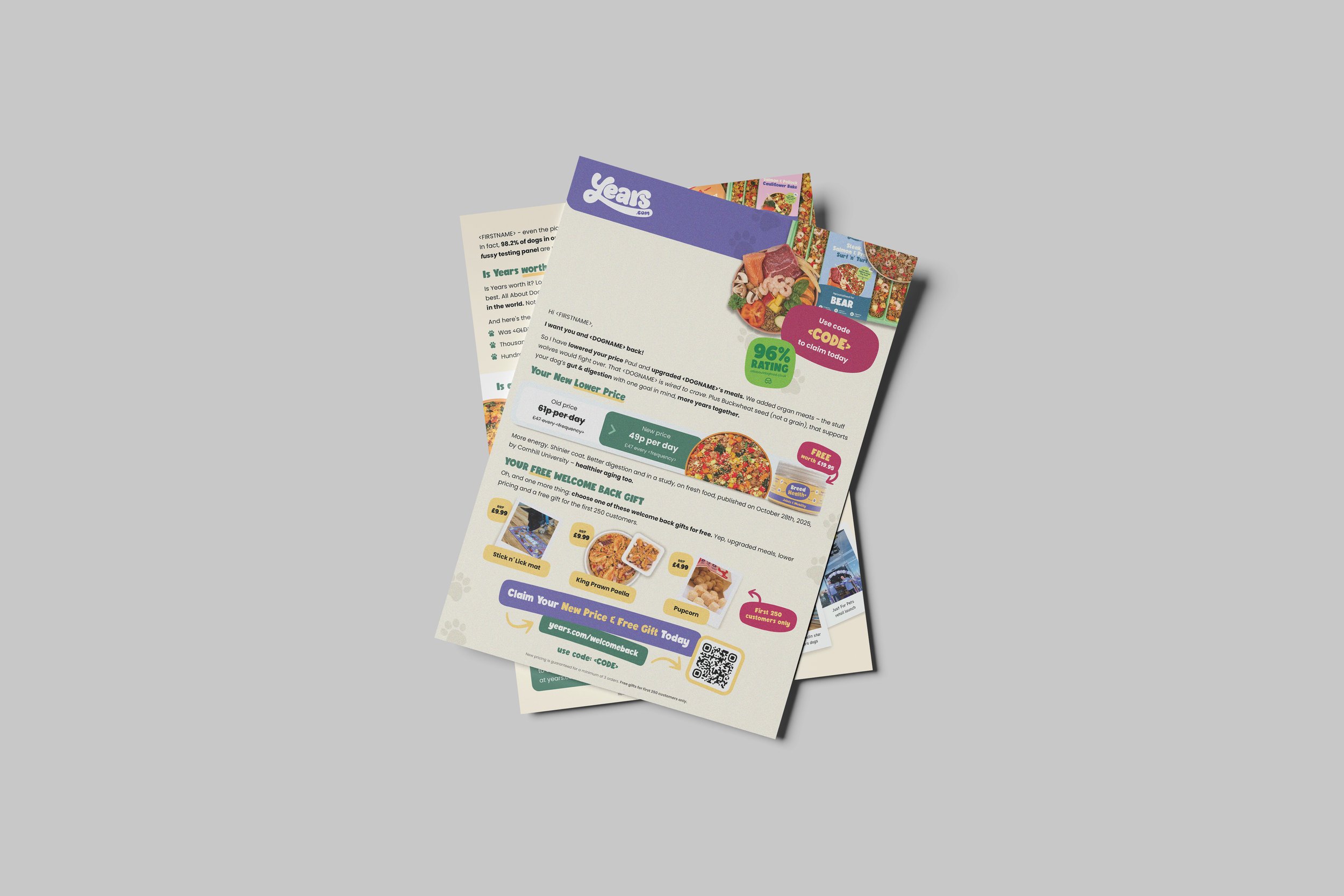
QR codes have become the simplest and most effective bridge between physical mail and online journeys. They allow direct mail to:
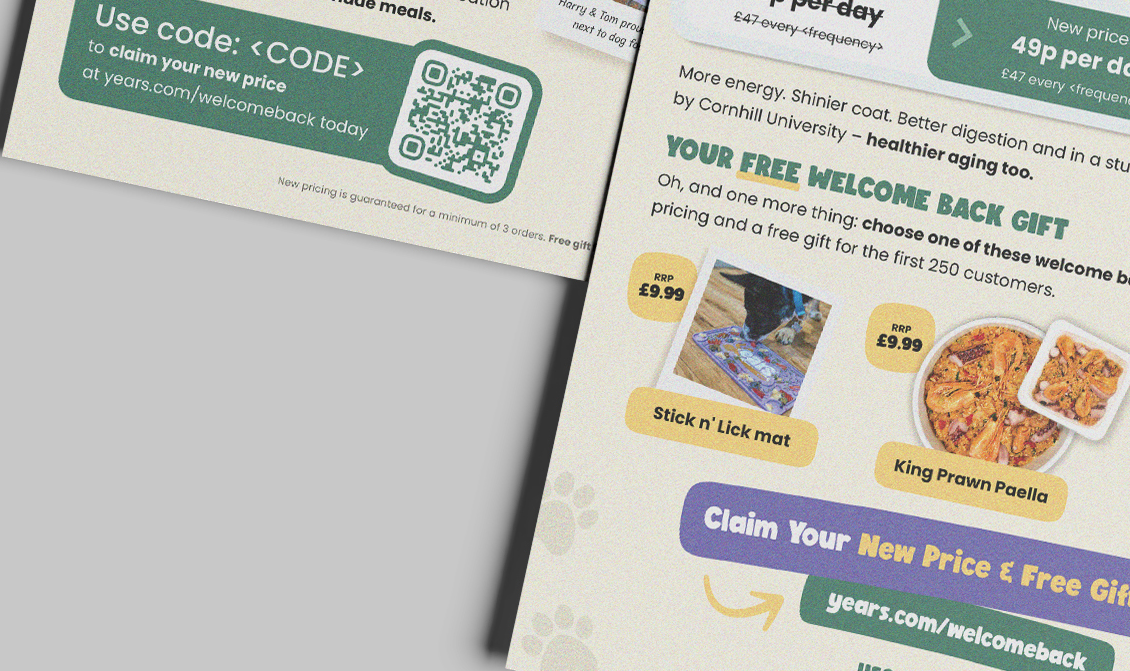
Years.com QR Code - A4 Letter Jan 2026
Drive people to relevant landing pages
Capture intent signals
Feed CRM and retargeting activity
Hand the journey back to digital channels seamlessly
Direct mail no longer needs to do everything in one moment. Often, its role is to prompt action, with digital channels continuing the conversation.
This applies just as much to campaign-led activity as it does to triggered mail.
Why this matters for subscriptions, DTC and CRM-led brands 📦
For subscription and DTC brands in particular, the opportunity isn’t choosing between campaigns or journeys. It’s designing how the two support each other.
Campaigns drive momentum and scale. Journeys improve efficiency, retention and lifetime value. When aligned, they create a system where:
Campaign activity feeds CRM
CRM activity improves conversion and retention
Learnings inform future campaign planning
That’s how direct mail moves from being episodic to genuinely strategic.
The real shift in 2026 is intention, not format
The most important change in how direct mail is being used isn’t about abandoning campaign thinking. It’s about being clearer on why mail is being sent, who it’s for and what role it plays in the wider marketing mix.
Campaigns still matter. Journey-led mail adds responsiveness and depth. Data connects the two.
That’s what’s changing how marketers think about direct mail in 2026. Not less mail. Smarter, more connected mail.
How JHET helps brands get more from campaigns and journeys 🤝
At JHET, we help brands design direct mail programmes that balance scale with precision.
That means planning effective campaign-led activity, layering in journey-based mail where it adds value, and using data to make both work harder together. The focus is always on relevance, connection and measurable performance.
If your direct mail feels disjointed or underpowered, the answer is rarely doing less of it. It’s making it work together.
Let’s make sure every piece of mail has a clear role and delivers on it.